
field guide #4 building a dancefloor of her own
a conversation with Natasha, aka Tashasan, founder of Huru-Hara


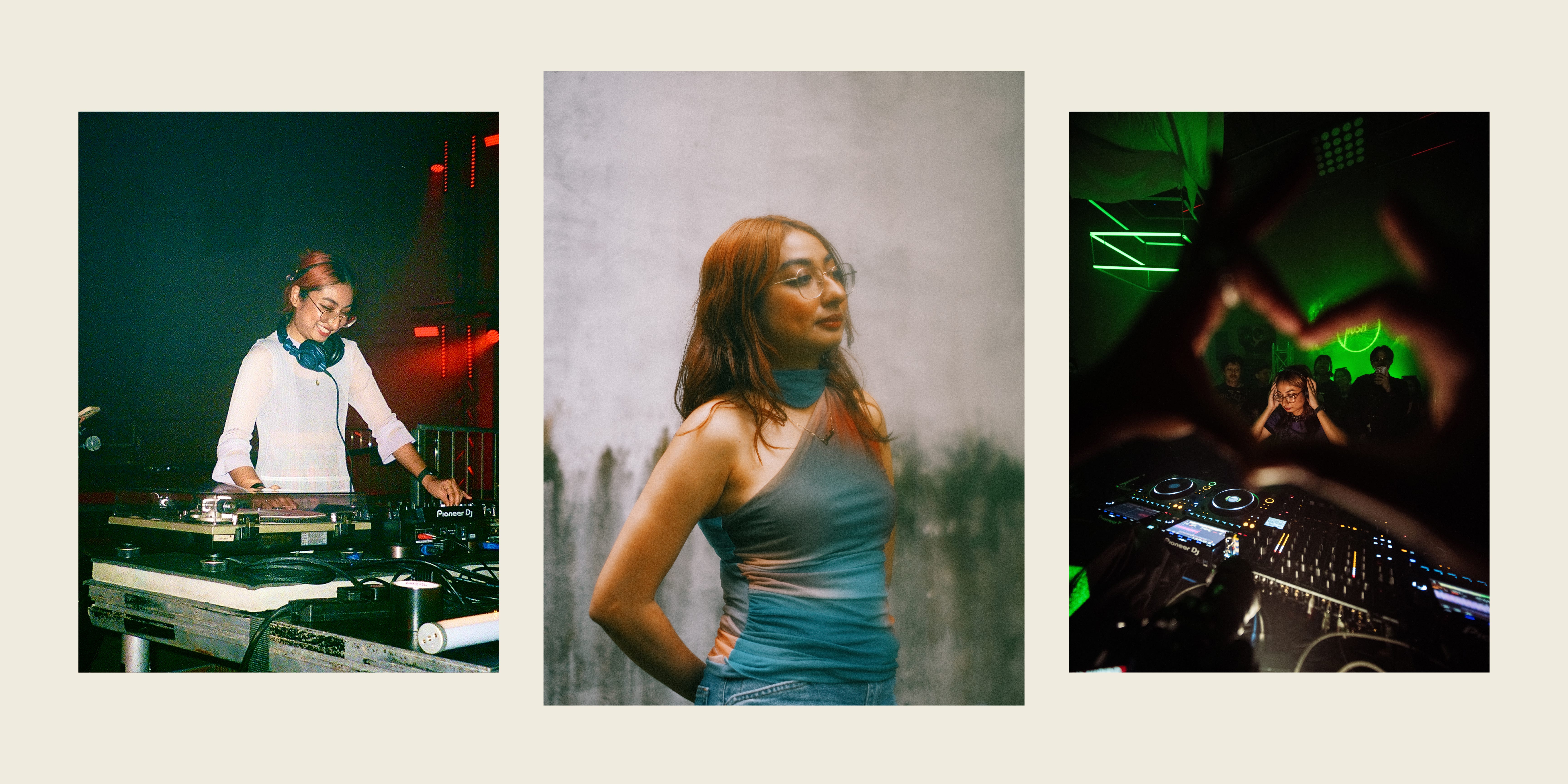
The first time I saw Tasha play was at Rasa in Singapore. I had just flown back to Malaysia for three days, one of those trips where you’re so jetlagged and emotionally strung out that everything feels slightly surreal. My friends made the executive decision to steal me away from my family for the night and bring me there.
I had met Tasha before, but this was the first time I had seen her play. Maybe it was the exhaustion setting in, or the adrenaline of having just cosplayed to my parents and then coming out, but I felt extremely alive listening to her set. There is something specific about seeing someone who looks like you, holding a room and getting people to dance along to your vision.
What I know now following her journey online and from afar, is that it makes complete sense. Tasha builds spaces for the people the room wasn’t always built for. The next time I saw her, she came to my 30th birthday in Amsterdam and played along to my birthday theme (Aunties & Uncles), without missing a beat. That’s Tasha.
TASHASAN’S FIELD
things she's thinking about, consuming, and returning to
Being empathetic and kind is punk.
Money can’t buy taste. Some of the most exciting music, design and culture comes from people working with very little because limitations often force originality.
Full Body Axy, my friend Yushh’s new album. Absolute banger.
Failtrylagi (Farizi) is one of my favorite local musicians and producers. I’m incredibly proud of him. Now he’s DJing too, which feels inevitable because he’s good at everything he touches. A genuine prodigy.
Earworm, a new neighbourhood bar in Singapore where I have my work. I’ve been working on it nonstop.
survivor!!! My friend Welyn got me back into Survivor sometime last year, and I’ve been hooked ever since. It’s honestly alarming how much Survivor I’ve consumed over the past few months. There are 50 seasons, by the way.
cringe is free. i have no guilty pleasure, nothing is too cringe for me.
Premium Economy. I took my first premium economy flight to New York last year, and I changed my mind on it. I don’t think my back can do more than 10 hours on an economy flight anymore.
IN TASHASAN’S FIELD:
what's a record that changed how you understood music, not your favourite, the one that shifted something
Slightly cancellable, admittedly, but In Rainbows by Radiohead. It's one of my favourite albums of all time, but more importantly, everything about it. The lyrics, the sonics, the atmosphere—connected with my entire being. I struggled with depression (a lot more when I was younger), and when I first heard that album it felt like something in my brain clicked into place. Suddenly everything made sense. It was like I could see colours through the music. There's something so special and tender about it, even in its melancholy. It changed the way I experienced music and influenced how I think about visuals too. Too bad, one of them is a Zionist, the other is impartial!
your work keeps coming back to reclaiming something: dub music, regional connections, heritage. is decolonialism a conscious framework for you or does it just come out naturally?
It comes out naturally. Again, I don't always want to frame everything through identity politics, but when you're constantly reminded that your identity places limits on what you're supposed to achieve, you inevitably start looking at the world through a more critical lens.
Kim Gordon once said, "Women make natural anarchists and revolutionaries because they've always been second-class citizens, kinda having had to claw their way up." That quote has stayed with me since I was 17 and discovered noise rock for the first time.
I was radicalised quite young because I was searching for something that made sense to me—something that could help me process and articulate my feelings about injustice. I was a very shy kid, and that music helped me a lot. Through that search, I immersed myself in punk, reggae, rocksteady, and all the cultures surrounding them. Looking back, I think a lot of my politics, values, and creative interests stem from that same desire to understand why the world is the way it is, and how it could be different.
how does your heritage show up in your work?
Corny answer incoming. I'm a brown woman. I don't always want to frame everything through identity politics, but let's be real: people who look like me haven't always been given a seat at the table, especially in Singapore. So I've spent a lot of my life building my own table and creating seats for people who share similar experiences. That naturally shapes the music I champion, the people I collaborate with, and the spaces I want to create.
what does it mean to play music that was made as protest music, in a nightclub, in Singapore, in 2026?
I think about that a lot. A nightclub isn't a parliament and a DJ set isn't a protest. At the same time, a lot of the music I love comes from communities that were responding to oppression, inequality, displacement, and struggle. Dub, reggae, soundsystem culture, even a lot of dance music traditions were never just about entertainment. I don't think my job is to lecture people on a dancefloor.
My job is to honour the histories that produced that music, create spaces where people can feel safe, and hopefully encourage curiosity about where these sounds came from in the first place.
TELL US ABOUT HURU HURA!!
Huru-Hara is a platform, label, and excuse for my friends and I to connect scenes across Southeast Asia. It started with a desire to build stronger relationships between Singapore and Kuala Lumpur, but it’s become something bigger than that. At its core, it’s about exchange, curiosity, and proving that our scenes are stronger when we work together.
Southeast Asia has its own underground scene that doesn't need to reference London or New York — do you feel like that's understood yet?
I think we understand it intellectually, but we're still fighting for it in practice. I'll admit that I still sometimes seek validation from those places too. Not because we need it, but because those cities have resources, infrastructure, and histories that we often don't. The difference is that we're building our own foundations rather than waiting for someone else to legitimise us.
Is there a moment from one of your events you still think about?
At the latest Keep Hush Singapore, all the girls and gays ended up right at the front. That’s who I do it for. Safe spaces and tough, heavy bass for the girlies. It felt like a full-on representation moment—a chance to come together with so many of the women I look up to, and an ode to the DJs who helped shape who I am today.
what do you know about yourself now that you didn't ten years ago?
I don’t need everyone to understand me. When I was younger, I spent a lot of energy trying to fit into spaces that weren’t built for me. These days, I’m much more interested in building the things I wish existed and finding the people who want to build them with me, not against me.
Make sure to follow Tashasan on her on Instagram, and if you want to get in touch, reach out to her at n.nathassan@gmail.com.
 | A guest post by
|
dank je wel!
YYYEEEEEEEEEE Nat is an icon 🔥